Managing retirement income can feel like solving a big puzzle. I often see people wondering how to cover monthly bills while keeping some savings protected and growing. Annuity ladder strategies offer a practical way to handle retirement cash flow, using several annuities with different start dates or fixed terms. I will walk through what an annuity ladder is, why it might work for your situation, and how to build a flexible plan that matches your needs.
Understanding Annuity Laddering and Flexible Retirement Income
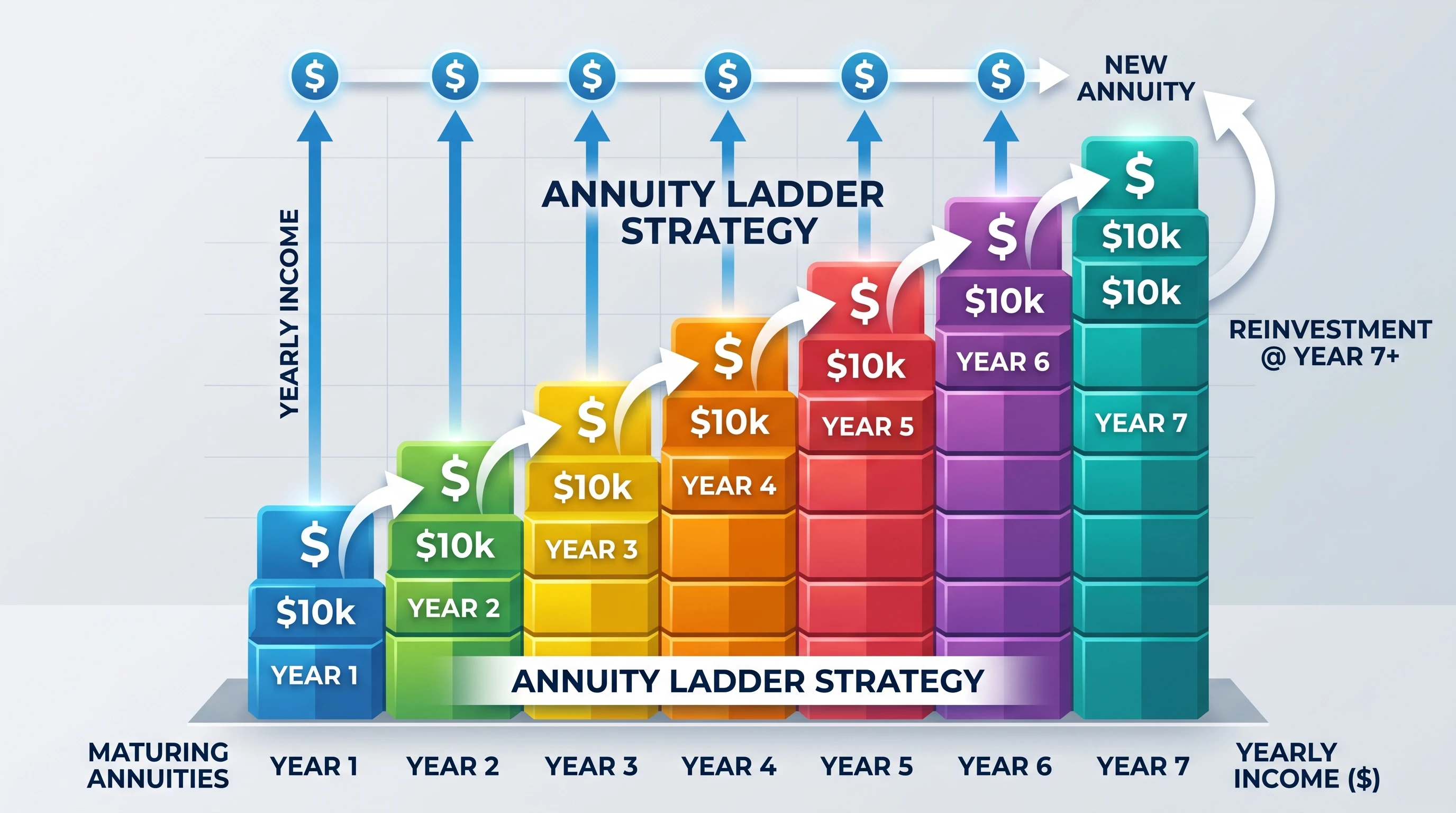
Annuity ladders make it possible to turn a chunk of your retirement savings into a series of small, reliable incomes that start at different times. Instead of buying one big annuity, I buy several annuities that “turn on” income over time. This spreads risk, offers a safety net, and can help fight rising prices, or inflation, during retirement.
The beauty of laddering is the flexibility it gives. Markets go up and down, costs change, and my health needs could switch up year to year. With an annuity ladder, I don’t lock all my money into one decision. Instead, I create steps that can adjust to my life as it unfolds. Financial experts from organizations like the Financial Industry Regulatory Authority (FINRA) and Consumer Financial Protection Bureau (CFPB) often recommend careful planning with annuities to match each retiree’s goals.
How to Start with an Annuity Ladder
Finding the right plan with annuity ladders means understanding the basic types available and how their “start dates” work. Here’s how I approach building a plan:
- Immediate annuities: These start sending monthly payments almost right away after I invest. They are handy for covering bills as soon as I retire.
- Deferred annuities: These don’t pay out until a set date in the future. I can schedule them to provide income every few years or to replace income from maturing earlier annuities.
- Fixed term annuities: These pay a steady income for a fixed number of years. When one ends, another one in the ladder starts paying, keeping the income flowing.
I like to think about big life milestones, like turning 65, starting Social Security, or planning for higher healthcare needs, and then set annuity start dates to match those changes.
Step-by-Step Guide to Building Your Own Annuity Ladder
- Calculate future cash flow needs: I start by listing regular bills, healthcare, leisure, and “what if” expenses for each phase of retirement.
- Set up the ladder: I decide how many rungs (annuities) will be in the ladder. For example, I might buy an immediate annuity for income now, then a second annuity set to start in five years, and a third set to start in ten.
- Choose annuity types and terms: Picking between immediate, deferred, and fixed term annuities helps shape how flexible the cash flow will be.
- Decide on purchase dates and amounts: Dividing retirement savings across multiple annuities instead of spending it all at once spreads out risk and can lead to better rates for later ladders if interest rates rise.
- Review and adjust over time: My needs might change, so I keep an eye on my cash flow and see if it might be worth adding another rung later.
Important Things to Consider Before Building an Annuity Ladder
- Interest rates can affect payouts: Buying an annuity when interest rates are higher usually leads to bigger monthly checks. Laddering gives me several chances to benefit if rates go up over time.
- Inflation risk: Payments from annuities can lose buying power over time. Mixing in annuities with cost of living adjustments helps, but not every plan offers this option. Buying in stages can also help me adjust to changing prices.
- Liquidity needs: Money used to buy annuities is locked up, so I only use the amount I know I won’t need for emergencies or big expenses outside retirement income.
- Company strength and policy details: I check insurance ratings on every annuity provider through tools like AM Best. Annuities are backed by state guarantees to a degree, but never more than the provider’s ability to pay.
Interest Rate Considerations
If I buy five smaller annuities spread out over a decade, I’m more likely to hit a good interest rate at least once, which helps make future payouts bigger. This makes sense for people like me who worry that rates could rise later and want the flexibility to take advantage.
Inflation and Cost of Living Adjustments
Inflation eats away at fixed payments, making it really important to plan for future price increases. Some annuities offer rising payouts, usually for a higher fee. I weigh whether paying more upfront is worth the long-term security or if mixing in investments with higher growth potential is a better fit for my plan.
Keeping Some Money Liquid
I always set aside an emergency fund before tying up money in annuities. This fund covers surprise medical costs, home repairs, or travel so I don’t touch annuity income or lock up all available cash.
Evaluating Providers and Policy Fine Print
Not every insurance company is equal. I check credit ratings and research their complaint history. Reviewing all the fine print, including surrender fees and payout options, keeps surprises to a minimum.
Building an annuity ladder takes some planning, but it brings peace of mind by ensuring steady payments and reduces the worry about outliving savings. Reliable advice comes from certified financial planners who work as fiduciaries, since they must offer guidance that works in my best interest.
Advanced Tactics for Making the Most of Annuity Ladders
As I get more comfortable with retirement planning, I find extra ways to make the most out of an annuity ladder:
Mixing with other investments: Some of my money stays in stocks or mutual funds for growth, while annuities offer safe, predictable cash flow. This balance can mean I cover regular expenses with annuity income and use investment profits for extras or future inflation.
Partial annuitization: I don’t need to move all my retirement cash at once. By annuitizing in pieces, I keep options open.
Using “deferred income annuities”: These offer bigger future payouts by growing for several years before payments kick in. If I’m healthy and want to cover later years (like those after age 80), they can work as protection against outliving my nest egg.
These extra strategies help me build the ladder to fit my own needs rather than following a one size fits all approach. If you want an all-in-one plan, annuity ladders can also be designed to accommodate that goal by combining various types for steady income and flexibility.
When Does an Annuity Ladder Make Sense?
- I want steady, predictable income for fixed expenses in retirement.
- I don’t know if interest rates will go up or down, and I want to hedge my bets across years.
- I worry about outliving my retirement savings.
- I prefer balancing guaranteed income with longer term investments for growth.
- I want to delay big Social Security withdrawals to maximize my benefits.
I see annuity ladders as best for people who do not need access to all their money at once and who value certainty with room to adjust. If investment risk makes me anxious, I find that staggered annuities help ease that stress. They also smooth the way for planning by offering a stepwise cash flow rather than a lump sum, which can reduce mistakes made under pressure.
Frequently Asked Questions About Annuity Ladder Strategies
Question: Do I need a lot of money to start an annuity ladder?
Answer: It’s possible to start small, using a portion of retirement savings. Many providers offer minimum purchase sizes, so I spread out the amount across several contracts.
Question: What happens if I need money early?
Answer: Most annuities are not liquid. That’s why keeping emergency funds and understanding withdrawal rules is really important before committing money to a ladder.
Question: Can I include inflation protection with a laddered approach?
Answer: Some annuities offer inflation adjusted payouts. I also use investment growth and staging new annuity purchases over time to deal with rising costs.
Question: Are annuity payouts taxed?
Answer: Yes, payments are taxed as ordinary income. Depending on how the annuity was funded, part of each check might be a return of my own money (principal), which is not taxed, while the rest is taxable interest or growth.
Practical Uses and Real World Scenarios
An annuity ladder fits a lot of different retirement styles. A real example: I split my retirement fund into three buckets. The first buys an immediate annuity to cover fixed bills for the first five years. The second is a deferred annuity set to start in year six, and a third is delayed to start after ten years. If I’m worried about early inflation, I may purchase later rungs only after seeing how the market and my expenses evolve. This keeps my plan agile and helps me sleep easier, knowing my living costs are always covered.
Professionals like Certified Financial Planners (CFP®) can help tailor the ladder to fit individual goals and spot potential pitfalls. I find that getting trusted expertise takes a lot of the guesswork away and brings more confidence to big retirement decisions.
With the right strategy and regular reviews, an annuity ladder builds a foundation of steady, flexible income that lasts through all stages of retirement. Whether I value security, growth, or balancing both, it’s an option that deserves a close look. If you want peace of mind, flexibility, and the advantage of capitalizing on future changes, annuity ladders are worth checking out.